
Resources
Bimetal vs Solid vs Trimetal Contact Rivets
Compare the material layout and manufacturing differences between three contact-rivet types. Use it as a starting point for your sourcing review.
For purchasing, engineering, and quality teams comparing a current part or new design.
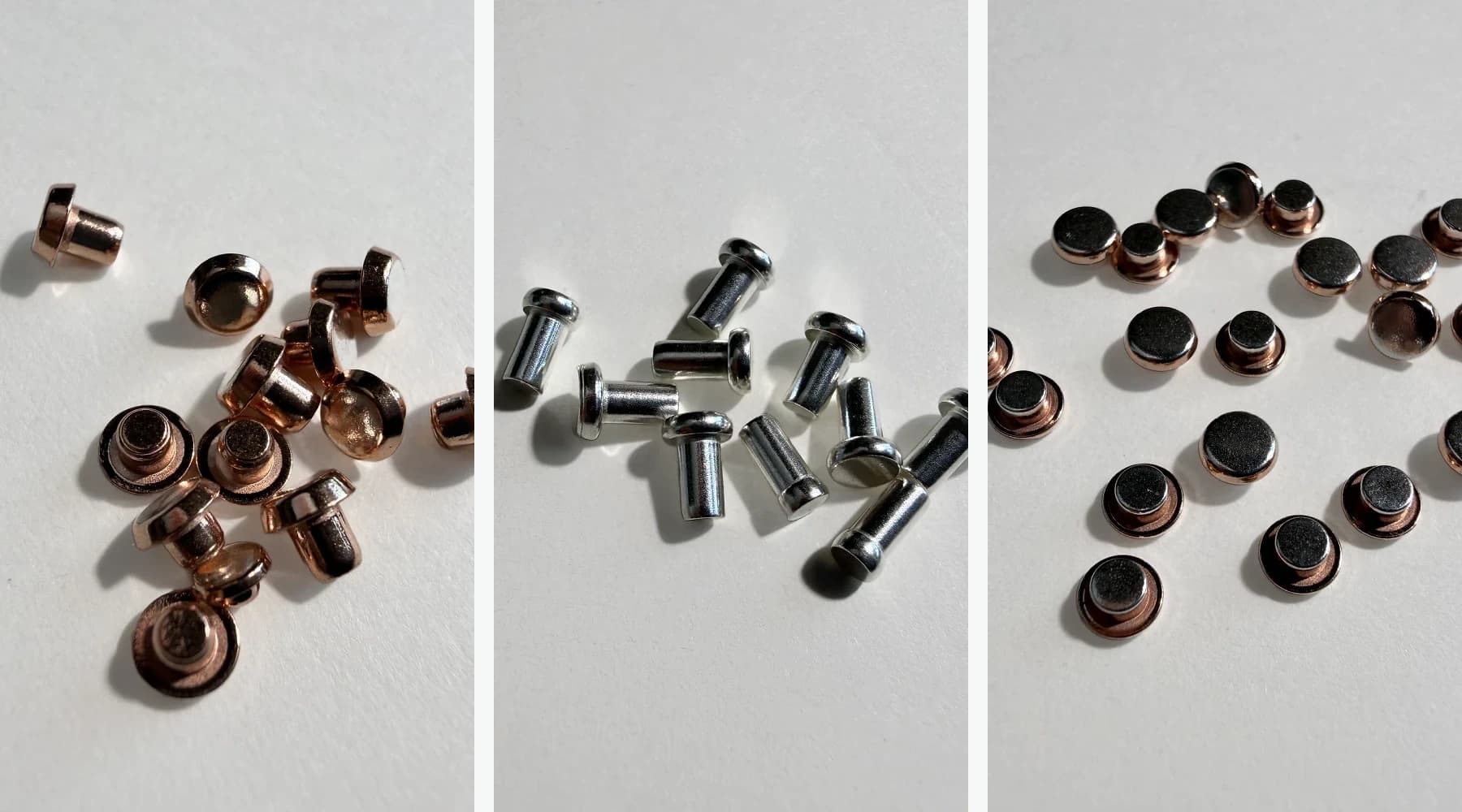
Start with the contact construction
A catalog name is only a starting point. Check where the contact material is needed, how the rivet joins the finished assembly, and which material system suits the application. The same application can use different contact-rivet types. Compare the drawing or sample, material, geometry, and inspection requirements together.
How the three structures differ
Solid contact rivets use one specified material through the head and shank. Confirm the head profile, shank form, finished surface, and assembly interface. Bimetal contact rivets combine a silver or silver-alloy contact head with a copper or specified base shank. The contact layer, head-and-shank relationship, and joining features are defined as one structure. Trimetal contact rivets use a three-part arrangement when the design needs contact material on more than one face or at the shank end. Type A and Type B structures are reviewed separately because their layer arrangements and geometry differ.
Information that helps select a starting point
A complete drawing is useful but not required for the first discussion. A product photo, physical sample, or short application description can identify the closest product type.
- Which face or end of the part functions as the contact surface
- The current material system or a known material requirement
- Head, shank, layer, and assembly features that must be retained
- The support part or assembly interface
- Quantity, timing, inspection, and destination-market requirements
Move from product type to production
After the first technical check, we can provide a preliminary feasibility assessment and non-binding budgetary quote from the available information. Final dimensions and tolerances, along with the final production pricing, follow the approved drawing or sample, material system, and verified manufacturing process.
Discuss your India project
Tell us which part you need and the quantity you have in mind. You can start with a drawing, sample, photo or application description. We will review the information and outline the next step for sampling or quotation.