
Buyer guide
AgNi vs AgSnO₂: What to Compare for an Electrical Contact
Compare the material grade and the switching conditions behind the part.
For engineering and purchasing teams reviewing silver-based contact rivets and assemblies.
Start with the full material specification
AgNi is a silver-nickel material family; AgSnO₂ is a silver-tin-oxide material family. Each name covers grades with different compositions and manufacturing states. A family name alone is not a complete purchasing specification.
Record the grade, material form, specified composition and relevant supplied condition. Compare the same grade and condition when discussing reference properties or a proposed supplier change.
Compare the tradeoffs that apply to the switching duty
AgNi is valued for its combination of electrical conductivity and resistance to arcing. AgSnO₂ is used in switching-contact applications where resistance to contact welding and material transfer is an important consideration. These descriptions identify discussion points, not a universal ranking between all grades.
The complete contact mechanism matters. Contact pressure, opening and closing speed, bounce, geometry and environment influence the performance achieved in service.
Swipe the table horizontally to see all columns.
| Question | AgNi | AgSnO₂ |
|---|---|---|
| What is the material family? | Silver with nickel | Silver with tin oxide |
| What belongs in the specification? | Full grade, nickel content, material form and supplied condition | Full grade, oxide composition, material form and supplied condition |
| Which behaviour should be examined? | Conductivity, contact resistance and arcing behaviour under the intended duty | Contact-welding tendency, material transfer and resistance under the intended duty |
| What needs application validation? | Contact geometry, mechanism, switching duty and the agreed acceptance criteria | Contact geometry, mechanism, switching duty and the agreed acceptance criteria |
This is a review framework. It does not assign a current rating, service life or drop-in substitution to either material family.
Include switch-on and switch-off conditions
Describe the load, AC or DC voltage, steady current, switch-on current and switching frequency. Motor, lamp and capacitive loads can make the switch-on condition different from the running-current figure; an inductive load also changes the interruption conditions.
For a proposed material change, define the condition being improved and the evidence required. Examples include contact welding, erosion, resistance drift or another observed behaviour. A single property such as hardness or silver content does not establish the complete result.
- Load type and AC or DC duty
- Steady current and available switch-on waveform
- Opening and closing conditions, contact pressure and bounce
- Operating environment and intended switching frequency
- Observed issue, target requirement and application-test plan
Keep the material, rivet structure and joining route connected
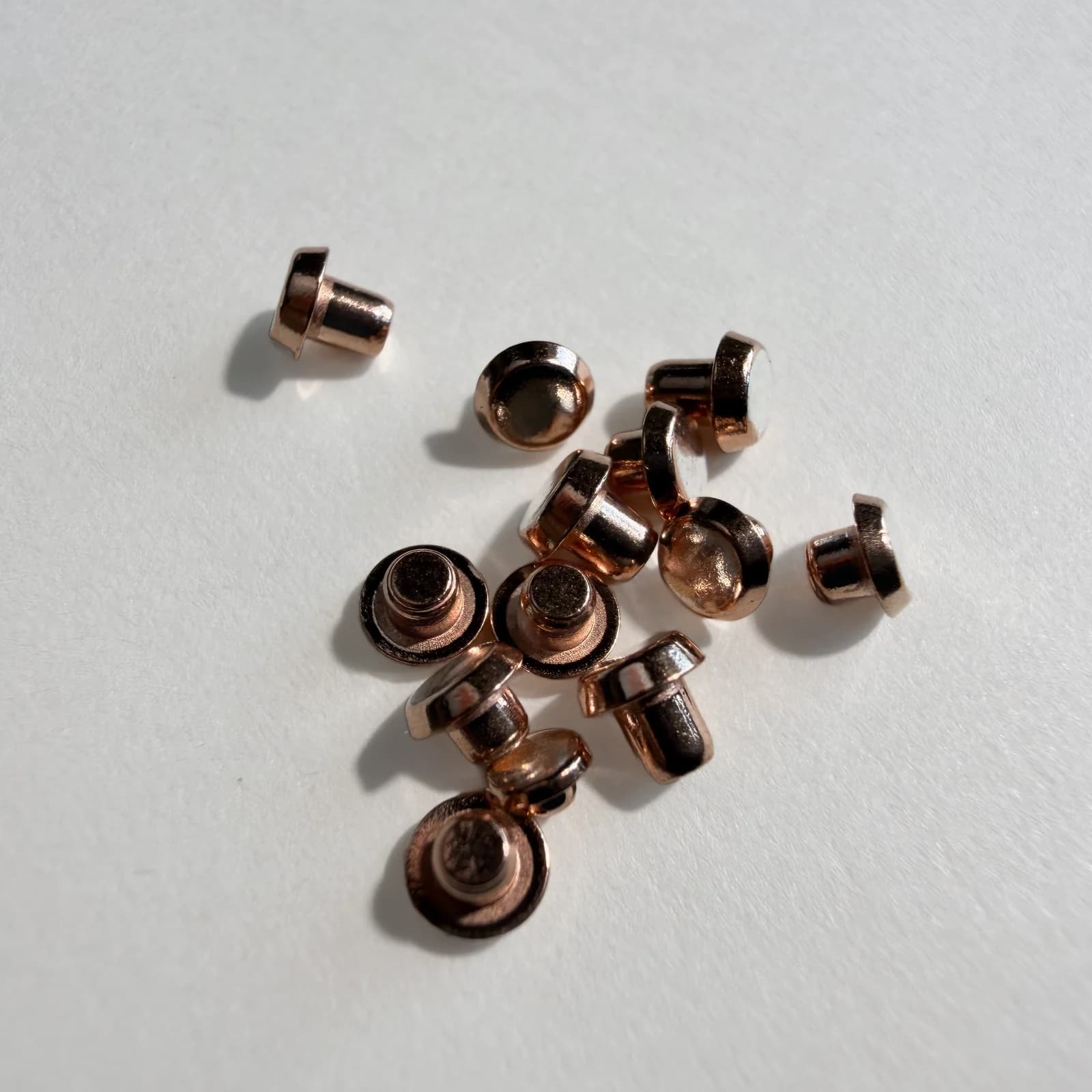
The contact material may form a complete solid rivet or a working layer in a composite rivet. Specify where the contact layer is needed, along with head and shank geometry and the approved layer requirement.
For a finished assembly, include the conductive support and the joining specification. A change in material or structure should be reviewed with forming, riveting, welding or brazing requirements and the checks on the finished part.
Use reference data to prepare an application test
Our AgNi and AgSnO₂ pages provide reference material-property ranges for the initial discussion. They do not replace the specified grade's material certificate or testing in the customer's contact mechanism.
Share the existing specification, drawing or sample and the switching conditions. We can review the material system and manufacturing route for the part; final acceptance follows the agreed sample and application requirements.