
Resources
Why Load Type Matters for Electrical Contacts
An operating-current number tells more when it comes with the load and switching behaviour.
For engineering and sourcing teams describing the duty of an electrical contact.
Put the current number in context
The running current describes one part of a contact’s job. A motor or incandescent lamp can draw a brief switch-on current above its steady value. The contact also has to perform the actual make-and-break sequence. A rating given for a resistive load describes that rating’s test duty. For another load, look for the corresponding application conditions and rating.
Separate running current from switch-on behaviour
The supply voltage, AC or DC duty and current waveform help explain what happens at the switching event. A waveform can reveal a short peak that the steady-current figure misses. The useful input is the electrical duty: what is being switched, how it behaves during operation and how often the contact operates.
Bring the contact mechanism into the discussion
Contact pressure, speed, bounce and environment affect the way the material performs in the complete mechanism. Material and mechanical design therefore belong in the same discussion. Microloads have their own reliability concerns, including surface films. High-current switching and low-energy signal contact are different application conditions.
Prepare a practical duty description
These details make a material or assembly discussion more specific:
- Load type: for example a motor, lamp or resistive load
- Applied voltage and whether the duty is AC or DC
- Steady operating current
- Switch-on current or waveform when available
- Switching frequency, contact mechanism and environment
Connect the duty to the part
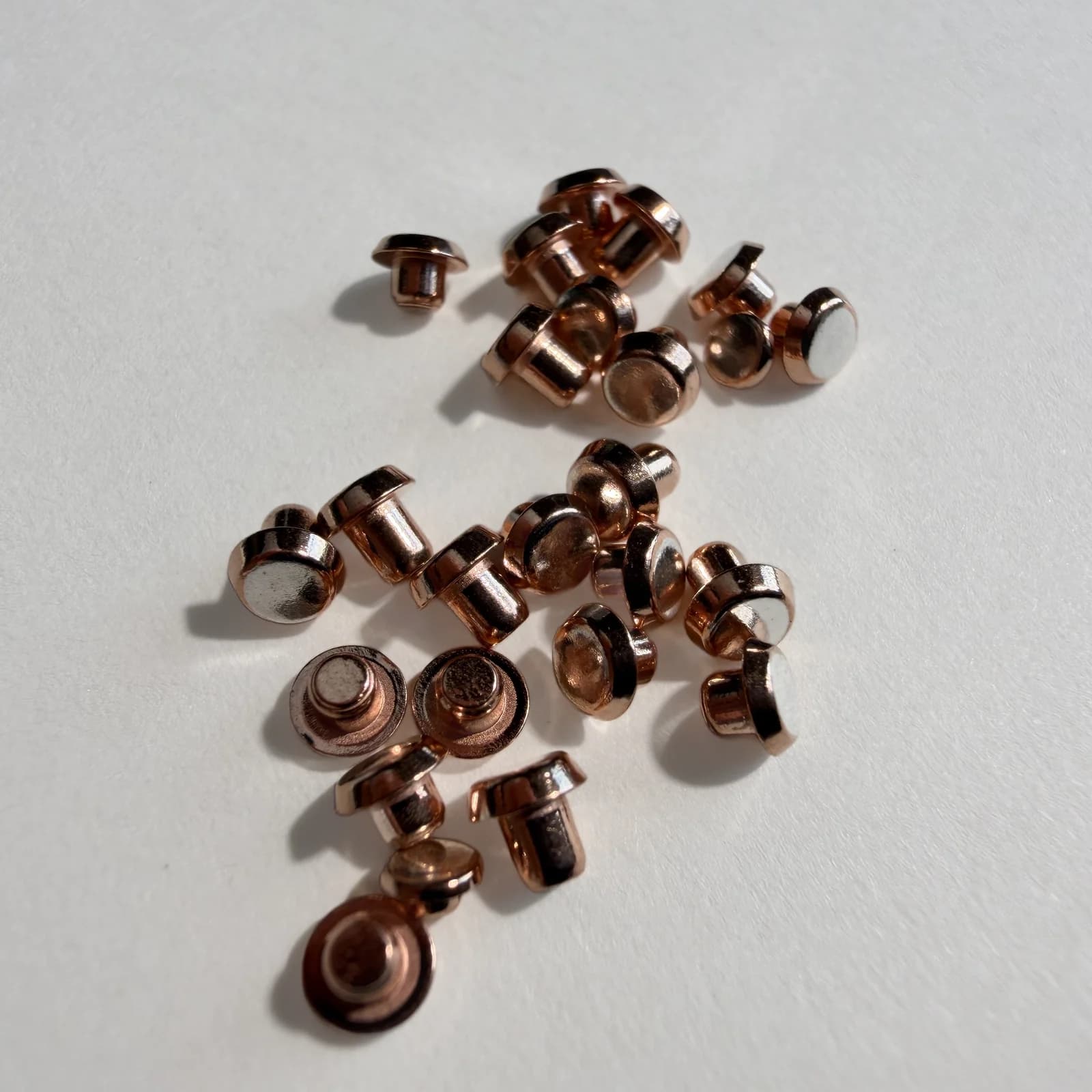
Compare the material system with the intended contact form, support and joining route. The product pages and reference material data provide a starting point for discussing the actual assembly. Our supply includes contact rivets, riveted and welded assemblies, and stamped conductive supports for electrical switching applications.
Further reading
Discuss Your Part
Tell us which part you need and the quantity you have in mind. You can start with a drawing, sample, photo or application description. We will review the information and outline the next step for sampling or quotation.